LIVE CONTRACT QUANTITY SURVEYING
Pre Start Meetings
A pre-start meeting is integral to the success of any construction project. It enables the team to meet face-to-face and provides the opportunity to clarify critical issues surrounding the pending construction works.
Providing effective pre-start meetings take place, it can minimise the risk of delays when construction commences, prevent miscommunication causing costly mistakes and ensure that every member of the team has approved the relevant works.
Beneficial for both contractors, clients and project managers, pre-start meetings should be standard before any project gets underway. However, it’s important to use pre-start meetings to add value to the project, as opposed to viewing them as a necessary administrative task. With the right approach and agenda, you can rely on pre-start meetings to reduce costs, minimise delays and improve the efficacy of any building works.
Who should attend pre-start meetings?
The list of attendees at pre-start meetings will depend on the nature of the project but the architect, quantity surveyor, project manager, lead construction engineer and the client and/or their representative should always be present. If the project involves using a team of subcontractors, their manager or supervisor should also attend the pre-start meeting.
In addition to this, specialist construction consultants can add significant value to pre-start meetings. With the knowledge and expertise to provide critical advice, inviting a dedicated building consultant to your pre-start meeting will help to ensure that all key areas are covered and that your interests are protected.
What’s included in a pre-start meeting?
There are various things to cover during a pre-start meeting, so it’s useful to have an agenda prepared in advance. Circulating the proposed agenda prior to the meeting will give attendees the opportunity to review any areas and suggest additional topics which may need to be included.
The first objective at a pre-start meeting is usually to clarify the responsibilities of each party and identify the individual(s) who will take ownership of each area. Once the roles and duties of each individual have been confirmed, lines of communication can be established, and future meeting schedules can be agreed.
In addition to this, pre-start meetings focus on project-specific issues, such as site access protocols, procurement schedules, query resolution strategies, monitoring processes, health and safety regulations, induction programs, mobilisation schedules, nomination instructions, lead-in materials, site conditions, insurance liabilities and any variations to the original plans, as well as any other issues which may affect the upcoming construction.
Preparing for pre-start meetings
In order to maximise the effectiveness of pre-start meetings, it’s important to prepare well in advance. By doing so, you can ensure that all relevant areas are included and that queries are fully resolved.
Whilst many of the issues raised may have already been documented in the pre-agreed contract, a pre-start meeting gives you the opportunity to clarify clauses and eliminate ambiguity. Furthermore, the minutes of a pre-start meeting can be used as a subcontract, providing both parties agree.
Valuations and Site Visits
Once construction work is underway, there are a number of protocols which should be followed. Valuations and site visits enable construction to be monitored at regular intervals and ensure that all parties have up to date details regarding the status of the project and any variation orders which have been applied.
What is a site visit?
A site visit may sound straightforward but it’s an important part of the construction process. While works are underway, dedicated personnel will visit the site to assess progress and determine which works have been completed, which are on-going, and which have yet to commence.
This ensures that the project is running to the agreed schedule and that interim targets are being hit. If necessary, variations orders can be discussed and implemented following a site visit. Whilst the vast majority of potential issues will have been dealt with contractually and at pre-start meetings, there can sometimes be surprises during the construction process itself.
Due to this, additional site visits may be appropriate. When extra works need to be undertaken or if variations are required, these costs will need to be contracted and monitored, in accordance with any existing contracts which are in place.
By using experienced construction consultants to carry out site visits, you can ensure that the project is being professionally assessed in its entirety. As well as providing you with accurate data and useful information, having an independent assessment carried out via a site visit ensures impartiality and can reduce the risk of disputes between parties.
What are valuations?
Throughout the course of the project, various valuations may need to be undertaken. An interim valuation assesses the level of works completed and can lead to interim payment resolution. Carried out by a quantity surveyor, interim valuations are usually scheduled within your original contract, although they can also be arranged on an ad hoc basis.
For contractors and building firms, having an accurate interim valuation and statement is the only way to show how much of the overall project has been completed. Without this, an interim application for payment can’t be made.
As most contractors will be relying on interim payments as their main or only source of income while works are underway, it’s vital that an interim valuation and site visits are carried out at appropriate intervals.
In addition to valuing the works completed, an experienced quantity surveyor will also assess any variations which have affected the project, as well as any potential variation orders which are expected. Although variations aren’t uncommon, they can alter the schedule and nature of the project quite considerably and may make a significant impact to the value of the works completed.
With the information gained from a valuation and site visits, all contractual parties can ensure that the project is progressing appropriately, and that completed works can be invoiced for, in accordance with the terms of the original contract.
Final Account
A final account document within construction contains all the financial aspects of the project, as well as any documentation in relation to costs. As interim payments are likely to have been made prior to the Final Account being prepared, these will need to be included and deducted from the total outstanding amount, as appropriate. Similarly, any variations which have not yet been covered by interim payments will need to be added to the Final Account.
Often, the presentation of the Final Account and subsequent Final Account Statement will have been included in the original contract. Typically, construction contracts require contractors to submit the relevant information to the appropriate personnel within six months of completion. This ensures that the appointed expert, such as a qualified quantity surveyor – WCSL Construction Consultants, can prepare the Final Account prior to the formal completion of the project.
What’s included in a Construction Final Account Document?
Although a final account may sound fairly straightforward, it can require significant planning and research. The work carried out may need to be measured, for example, and then billed for at the previously agreed price set out in the contract. This requires an innate understanding of the industry, as well as the skills necessary to make such valuations, and should only be carried out by suitably qualified personnel, such as quantity surveyors.
In addition to this, a Final Account may also include:
- Valuation of contractors work
- Value of work which was estimated in prior agreements
- Tender adjustments
- Profits the contractor may have accrued via suppliers and subcontractors
- Outstanding statutory charges, testing and opening up fees, patents, insurances and royalties
- Amounts and prime cost sums in relation to each contractor and subcontractor
- Allowable amounts under fluctuation clauses
Preparing the Final Account in accordance with the contract
Whilst some details are included in the Final Account as standard, any final account should also reflect the contract it relates to. There may be specific clauses governing variation orders, for example, and this could have an impact on what amounts are included in the Final Account.
Due to this, it’s essential that your chosen quantity surveyor is familiar with the contract and has the opportunity to examine each clause in detail. Whilst it isn’t always necessary for a surveyor to visit a site for the sole purpose of preparing the Final Account, it is often a practicable way of conducting the relevant measurements. In such cases, representatives of the contractor and the client should be invited to attend, so that they can verify the accuracy of the measurements taken.
An incomplete or inaccurate Final Account can lead to unnecessary delays and disputes, so it’s vital that any final account is prepared with attention to detail, accuracy and expertise. With seasoned quantity surveyors ready to assist with all elements of Final Account preparation, WCSL Construction Consultants can provide final account services tailored to your needs.
Programme Of Works.
Detailed Forecasting. Decades Of Experience.
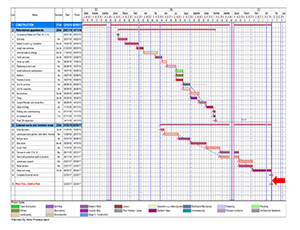
Every construction project worker knows that time is money, which is why strategic planning is essential for keeping the work on task to reach its completion on time and budget. The Programme of Works is a detailed document that can have a telling impact for the whole team on the construction of your domestic or commercial project.
Here at WCSL Construction Consultants, our team of experienced, quantity surveyors are capable of returning highly accurate files that provide the guidance needed, before taking the next logical steps.
Let’s discuss your requirements today.
Key Benefits
- Free project consultations for all prospective clients.
- Save time and money to reduce waste to win more contracts and gain fewer rejections.
- Gain deeper insight into the projected scheduling of the works you propose to take on.
- Keep all members of your team in the know during this key process.
Plot The Process in Style
Planning each stage of the project with greater accuracy prevents a range of problems for your team. We can produce a detailed programme of works to highlight how long each task should take and look at the anticipated project duration. This can support you when building your projects.
Keep Clients In The Know
An accurate Programme of Works isn’t only great news for your business. It allows you to provide clients with accurate plans that will provide far clearer insight into the bid proposal. Aside from enhancing the bidding process, it enables you to provide greater clarity throughout the project.
Versatile Programme Of Works
WCSL prides itself on helping as many people as possible and our detailed programme of works can be used for various projects including self-builds. Contractors, project managers, builders, architects, and related personnel can all see huge benefits from using the programme of works.
Method Statement
Accurate Project Planning. Stunning Results.
Also referred to as the “safe system of work” document, a Method Statement is one of the most critical files in the pre-project planning phases. The step-by-step guide on how works will be completed will ensure that all assignments are completed in a safe and efficient manner. Our experienced quantity surveyors can prepare the document to take all key elements into account, which can also be used to provide clients with added clarity.
Key Benefits
- Free project consultations to discuss method statement requirements.
- Save time and money in the long run through clear and detailed planning.
- >Avoid delays, setbacks, and miscommunications with the client.
- Use the document alongside other key features of the building project.
Outline Hazards & Obstacles
Safety is a priority shared by all project managers. The method statement plots out every step of the contracting process to ensure that all hazards at every stage of the journey is completed to the highest safety standards by detailing any potential safety risks during and after completion.
Planning The Inventory
Before starting any project, it’s vital to order all necessary tools, materials, and equipment for the site. Detailed method statements prevent any threat of overlooking key items. In turn, this allows you to complete the project in a smooth and stress-free manner every time.
Effective Contingency Planning
While the method statement is primarily designed to plan the process to avoid problems, it’s still possible that outside factors can impact the situation, especially when working outside. A detailed method statement looks for the most practical solutions and considers potential changes that may occur.
Do you need guidance on a new construction project?
Have you encountered an issue on a project you’re engaged in right now and need help?
If so, then you could benefit from development advice from WCSL Construction Consultants.
Development advice is a comprehensive consultancy and implementation service that helps your business push through difficult hurdles and challenges during a building project. The purpose of the service is to provide support wherever is necessary across a range of dimensions. With proper development advice, you’re able to get your construction project back on track and meet your targets.
You can use development advice for all kinds of reasons.
Find Local Sites With Development Potential
Sometimes it can be challenging to find sites near your present location with development potential. You may believe that you’ve found a great place, but with so many factors to consider, you might not be sure.
Development advice can help you tremendously if you’re struggling to determine whether you have chosen a suitable location. With the help of a development professional, you can discover with confidence whether a site has potential and if you should go ahead. Professional assistance gives you peace of mind.
Get Planning Permission Advice
Getting planning permission for a project can be a challenge. Development advice, however, helps you find out whether you’re likely to get the go-ahead from local authorities and which planning issues you may face. Building consultants have vast experience across a range of development issues and can give you sound advice based on precedence. The goal is to ensure that you’re never in the dark about whether a project is likely to be allowed to go ahead or not.
No matter what property it is, we are here to offer the advice to help you
Are you a homeowner wanting to find out whether your new extension is financially viable?
Are you a property developer needing estimates for the cost of a new project?
If so, then you may benefit substantially from property advice.
Property advice is a catch-all term which describes a variety of building consulting niches. These could include anything, from helping developers organise major homebuilding projects to assisting architects to work out how much a project would cost to develop.
The benefits of property advice are enormous. Here are just some of the ways that property advice consultants can help homeowners, architects, and people in the building construction industry.